Webhooks
Receive GridOS events in your own billing, CRM, or automation systems.
Webhooks push platform events (for example session started/stopped, charger offline) to HTTPS endpoints you control.
Register and debug delivery from the Dashboard under Observability → Webhooks.
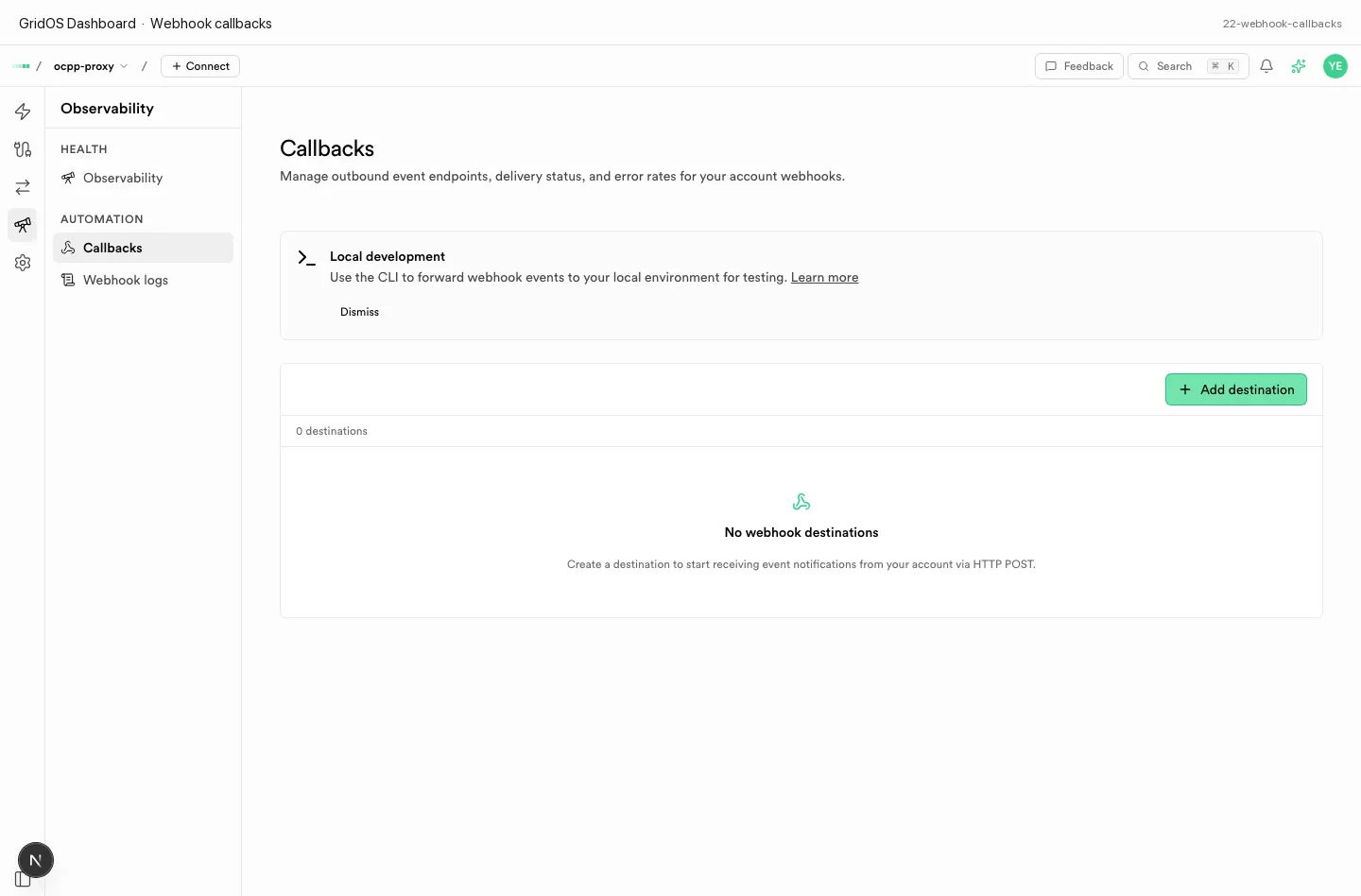
Webhook callbacks — register HTTPS endpoints and signing secrets in the Dashboard.
Never paste live OCPP passwords, OCPI tokens, or client certificates into tickets, chat, or public issues. Rotate anything that may have been exposed and use Dashboard or your secret store for operational credentials.
Setup
Create an endpoint
Accept
POSTJSON and return2xxas soon as the payload is accepted (enqueue work if needed).Register URL and secret
Register the URL and a signing secret in the Dashboard (or via API when available).
Verify signatures
Verify signatures on every request; reject invalid or replayed payloads.
webhook-handler.ts// Pseudocode — verify signature then enqueue work export async function POST(req: Request) { const raw = await req.text() if (!verifySignature(raw, req.headers)) { return new Response("invalid signature", { status: 401 }) } await queue.enqueue(JSON.parse(raw)) return new Response(null, { status: 204 }) }Process asynchronously
Process work off-request if it can exceed a few seconds. Expect at-least-once delivery; make handlers idempotent.
Delivery logs
Path: /dashboard/webhooks/logs
Use delivery logs when a consumer is silent or returning non-2xx responses. Each attempt records status code and retry state.
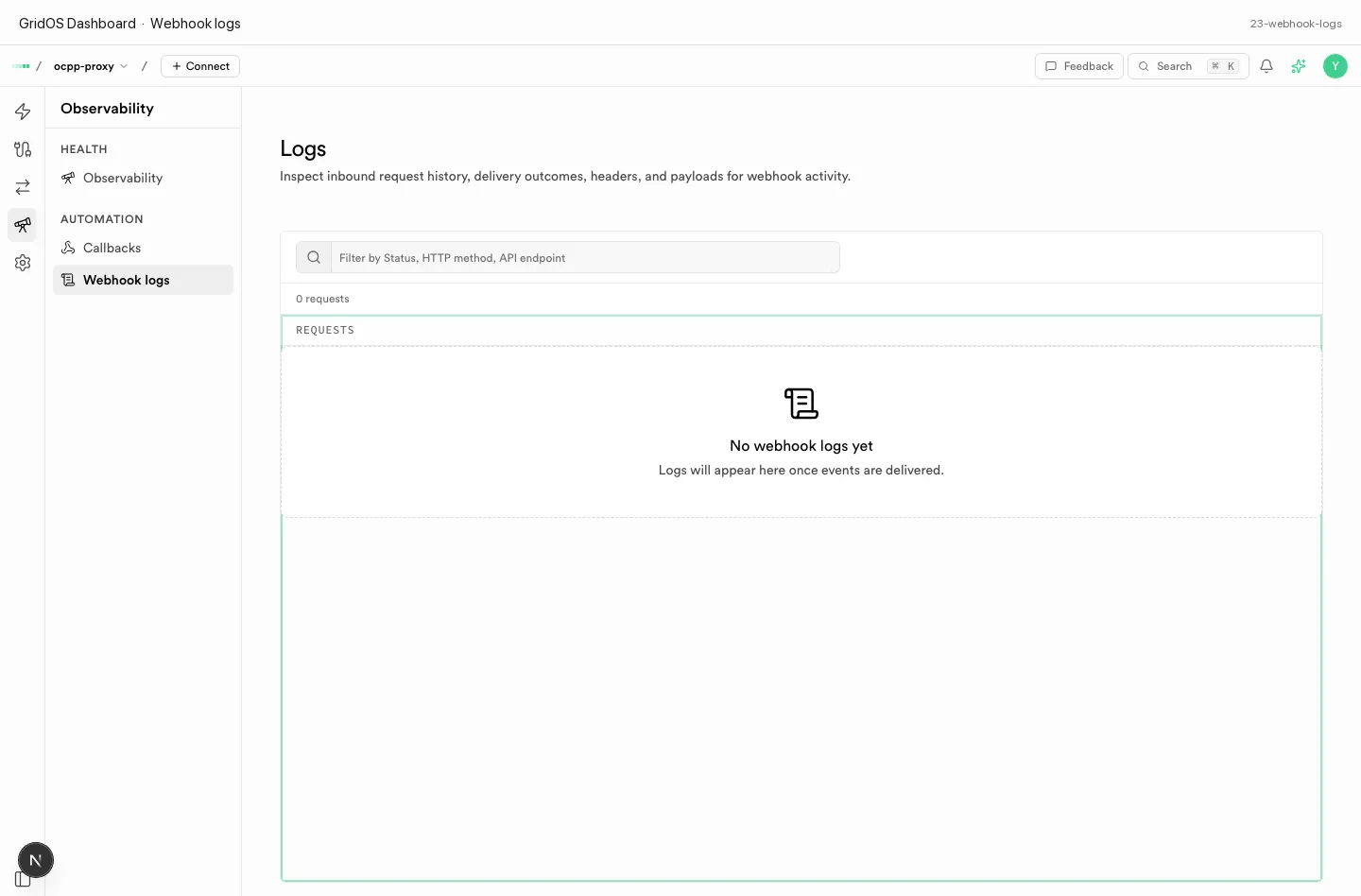
Webhook logs — delivery attempts, HTTP status, and retries.
Reliability
- Monitor failure rates; disable or rotate endpoints that hard-fail
- Prefer private network allowlists where your cloud supports them
- Confirm the callback is listed under Observability before blaming the producer
Related
- Dashboard — where callbacks and logs live in the UI
- Architecture — how events leave the data plane